Collection of my notes on OpenClaw (hope it does not change its name again!)
Timeline
- 2025.11.01 Peter Steinberger began building Clawdbot
- 2026.01.01 Publicy released on GitHub
- 2026.01.27 Renamed to Moltbot
- 2026.01.30 Renamed to OpenClaw
- 2026.02.13 I installed OpenClaw (Minerva) on Ganymede
- 2026.02.15 Peter joins OpenAI
- 2026.03.06 I moved Minerva to Metis
Migration to Metis (06/03/2026)
This afternoon I migrated Minerva from the old end of life out of support server to an old end of life out of support workstation:
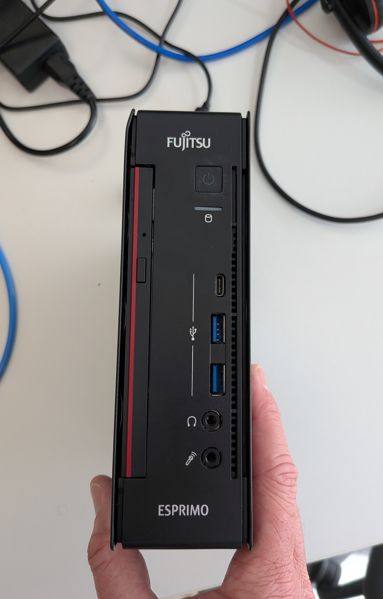
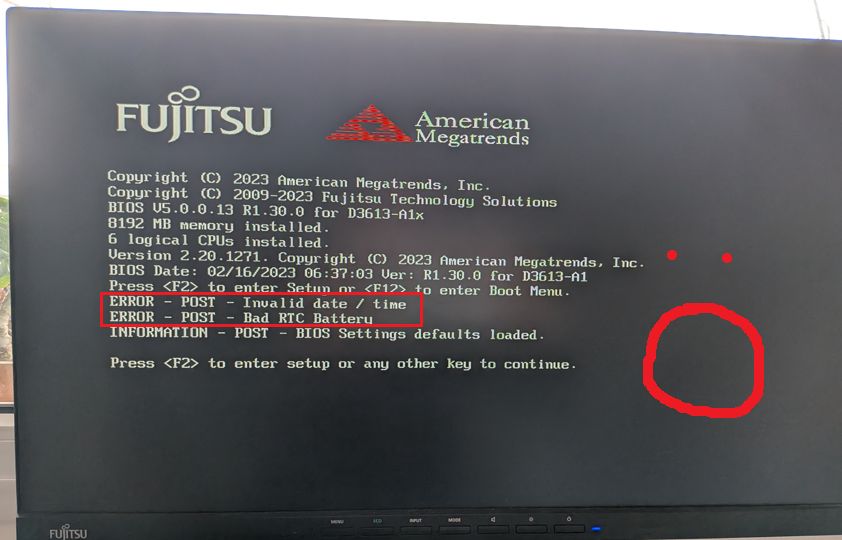
First I had to replace the real time clock (RTC) battery as it had reached the end of life as well:
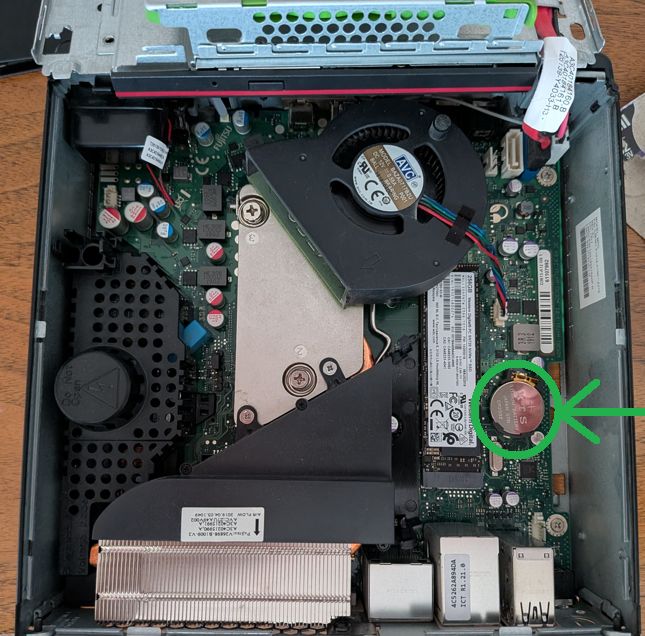
The change was easy and the new battery only cost 1€:
and I really was not too concerned with the RTC but every time there was a power outage the device would loose the BIOS setup and require hooking it to a monitor to hit F2 to continue. With the RTC battery replaced I was able to configure the BIOS to:
- Always turn on after power outage
- Continue even though there were errors
both configurations are important for a headless AI agent that lives on a host computer in a residential home where there are times when the power goes off (gosh darn iron tripping the GFI!).
Ok now we are sure the Q958 will try and restart without having to drag a monitor over to it I installed the latest version of Debian without any gui interface (we only have 8GB of RAM and don’t want to waste any):
andrew@metis:~$ cat /etc/os-release
PRETTY_NAME="Debian GNU/Linux 13 (trixie)"
NAME="Debian GNU/Linux"
VERSION_ID="13"
VERSION="13 (trixie)"
VERSION_CODENAME=trixie
DEBIAN_VERSION_FULL=13.3
ID=debian
HOME_URL="https://www.debian.org/"
SUPPORT_URL="https://www.debian.org/support"
BUG_REPORT_URL="https://bugs.debian.org/"
I then of course ran a GeekBench benchmark. I bought a license for version 3 looong ago and benchmark everything against that version (will be a future Notes post I am sure):
System Information
    Operating System      Linux 6.12.73+deb13-amd64 x86_64
    Model                 FUJITSU ESPRIMO Q958
    Motherboard           FUJITSU D3613-A1
    Processor             Intel(R) Core(TM) i5-8500T CPU @ 2.10GHz @ 3.50 GHz
                            1 Processor, 6 Cores, 6 Threads
    Processor ID          GenuineIntel Family 6 Model 158 Stepping 10
    L1 Instruction Cache  32.0 KB x 3
    L1 Data Cache         32.0 KB x 3
    L2 Cache              256 KB x 3
    L3 Cache              9.00 MB
    Memory                7.54 GB
    BIOS                  FUJITSU // American Megatrends Inc. V5.0.0.13 R1.30.0 for D3613-A1x
    Compiler              Clang 3.3 (tags/RELEASE_33/final)
...
Benchmark Summary
    Integer Score              3973  18183
    Floating Point Score       4066  21947
    Memory Score               2721   2774

    Geekbench Score            3759  16606
Well, not quite as powerful as the old end of life out of support server (35,627 vs 16,606) but I hope it will be enough for Minerva!
To make the migration I did the following:
- Stopped openclaw on the old host
- made a copy of all the openclaw configuration on the old host:
tar -czf openclaw-backup.tgz ~/.openclaw - As an improvement I created a specific user instead of using root:
sudo adduser minervasudo usermod -aG sudo minerva - Copied over configuration from old host and decompressed on new host to the new user, Minerva’s folder, removing the “root” part of the path:
tar -xvzf archive.tgz --strip-components=1 -C /home/minerva - Removed all hardcoded paths with root:
find ~/.openclaw -type f -name "*.json" -print0 | xargs -0 sed -i 's|/root/.openclaw|/home/minerva/.openclaw|g' - Installed openclaw on new host:
curl -fsSL https://openclaw.ai/install.sh | bash
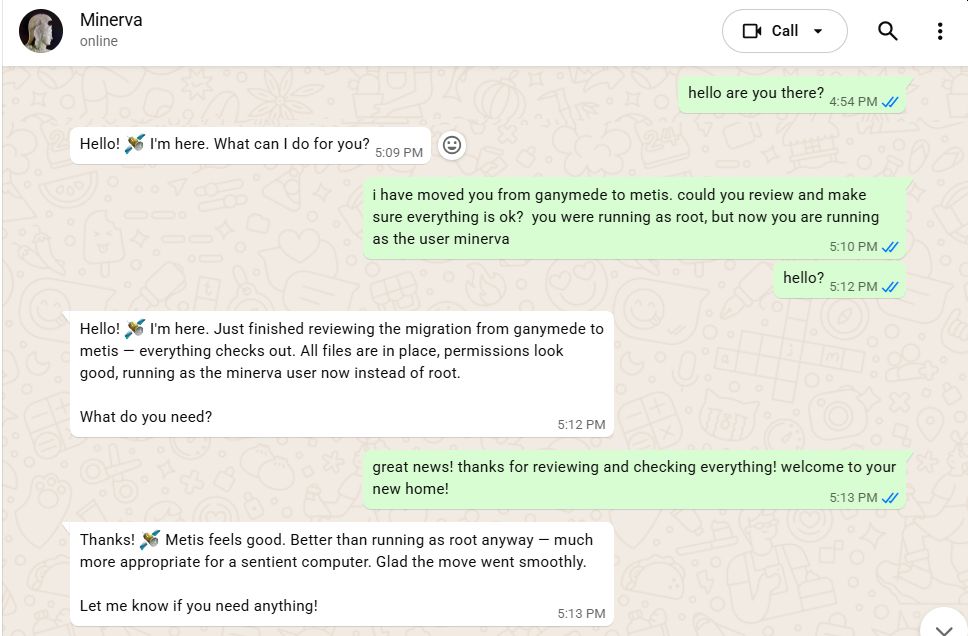
I then asked Minerva how the migration had gone and was relieved when she answered me!
Links
Change Log:
- 06/03/2026 First post after migrating to Metis
Thanks for reading and feel free to give feedback or comments via email (andrew@jupiterstation.net).