Today I read an article that in October Iceland officially classified the failure of the Atlantic meridional overturning circulation (AMOC) as a national security risk. If the AMOC were to fail, temperatures in Iceland could plunge to -50º Farenheit and would glacier over.
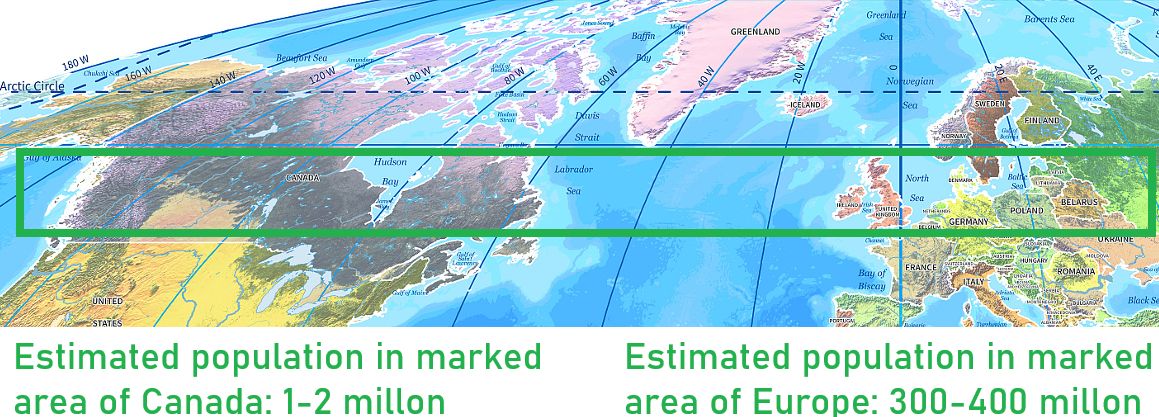
I first heard about the AMOC in the highly recommendable book “A Short History of Nearly Everything” by Bill Bryson. From what I remember is that he said: look at where England is and then trace on a globe to see where that lines up at on North America. Why is one a tundra and the other highly populated? AMOC.
Read on to see my notes on AMOC.
What the AMOC is
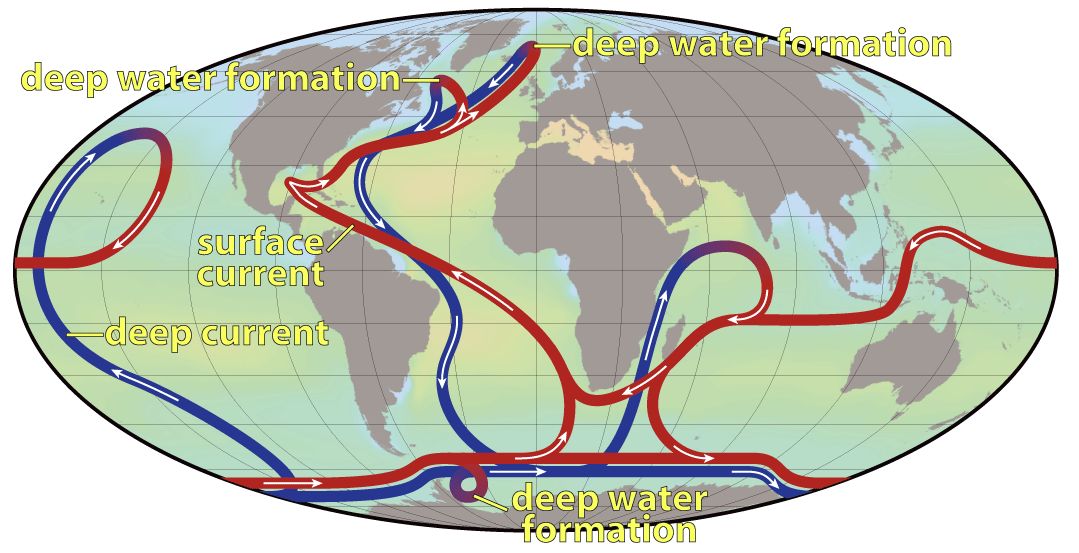
The AMOC is like a massive conveyor belt in the Atlantic Ocean that moves warm water northward near the surface and cold water southward at depth. It’s part of the global ocean circulation system that helps regulate climate.
How it works
Warm, salty water flows north along the surface from the tropics toward the Arctic. This water is salty due higher evaporation in the tropical zone. The water flows north due to a combination of winds that push the water northward and the Coriolis effect that help steer currents generally in a northward and eastward direction. As this water reaches the cold North Atlantic (particularly around Greenland and the Nordic Seas), it cools down, becomes denser, and sinks. This deep, cold water then flows southward, eventually spreading throughout the world’s oceans.
Here is visual:
Why it matters
The AMOC plays a crucial role in Earth’s climate system. It transports enormous amounts of heat northward—helping keep Europe much warmer than it would otherwise be at those latitudes. It also influences rainfall patterns, particularly in the tropics and the Sahel region of Africa, and affects marine ecosystems by distributing nutrients.
Why would it fail?
There are a few things:
- The concern is that as things get hotter more and more of the Greenland ice sheet and Arctic sea ice melt adding fresh water to the mix. If the surface water becomes too fresh, it might not sink effectively weakening the engine that drives the circulation.
- A warmer atmosphere holds more moisture and that could also increase the freshwater that is runoff into the North Atlantic.
- Things just don’t get as cold as they used to in the North Atlantic and if surface waters do not cool enough in the winter they may not become dense enough to sink.
Has this happened before?
Ice cores and ocean sediment records show that during the last ice age large meltwater pulses disrupted the AMOC. Events like the Younger Dryas (~12,800 years ago) caused rapid cooling in Europe and the AMOC appears to have slowed dramatically during those events.
If it were to fail, what could be the results?
- Severe cooling in Northern Europe - temperatures could drop by 5-15°C in some regions, potentially bringing winters similar to those in similarly-latitude parts of Canada, essentially reversing centuries of relatively mild climate
- Cooling in parts of North America - particularly the northeastern US and eastern Canada would experience significant temperature drops
- Sea level rise along the US East Coast - could see an additional 1-2 feet (30-60 cm) of sea level rise on top of global increases, as the AMOC currently creates a slight “dip” in sea level there
- Disrupted rainfall patterns - the tropical rain belt would shift southward, potentially causing severe droughts in the Sahel region of Africa and altering monsoons in South America and Asia
- Amazon rainforest stress - combined with other climate pressures, rainfall changes could push parts of the Amazon toward becoming savanna
- Marine ecosystem collapse - dramatic changes to fish populations and marine food webs in the North Atlantic, affecting fisheries
- Faster warming in the Southern Hemisphere - without heat being transported north, the south would warm more rapidly
- Increased extreme weather - more volatile and unpredictable weather patterns across affected regions
- Agricultural disruption - growing seasons and crop viability would shift dramatically in Europe and parts of North America and Africa
This is a bunch of poppycock
How could there be “severe cooling” in Northern Europe if all the global warming alarmist keep telling us things will get hotter?
You make no sense!
Well, that is why I started with the graphic at the very top! It is the AMOC that has allowed comfortable living at such a high latitude (200 to 400 times greater population in Europe). The sweetest of all of this is the same day I saw the article about Iceland including this as a national security risk, I heard on NPR that Trump announced a new executive order that directs the Pentagon to buy power from coal plants. I guess that is what happens when you give a 79 year old narcissist control of the United States.
Links, References and things that helped with this
- Why this country declared an ocean current collapse a national security risk
- Source of Map at top: World Map Bank
Thanks for reading and feel free to give feedback or comments via email (andrew@jupiterstation.net).